Come si forma il Past Perfect Continuous?
Il Past Perfect Continuous è un verbo composto inglese costituito da due elementi: il verbo to be al Past Perfect e il verbo di riferimento alla forma progressiva -ing. Questo vale sia per la forma affermativa, che negativa e interrogativa.
Ripassa questi Step:
Come si forma il Past Perfect?
Come si forma il Present Perfect Continuous?
Come si forma il Present Continuous?
Tabella: verbi irregolari in inglese
Argomenti di questo Step
Come si costruisce il Past Perfect Continuous?
Come dice il nome stesso, questo tempo verbale è la forma progressiva del Past Perfect.
La regola per la sua costruzione seguirà, quindi, sia la regola del Past Perfect che quella della forma progressiva.
Vediamola step by step…
Esattamente come il Past Perfect, anche il Past Perfect Continuous viene definito “verbo composto” in quanto si costruisce unendo due elementi.
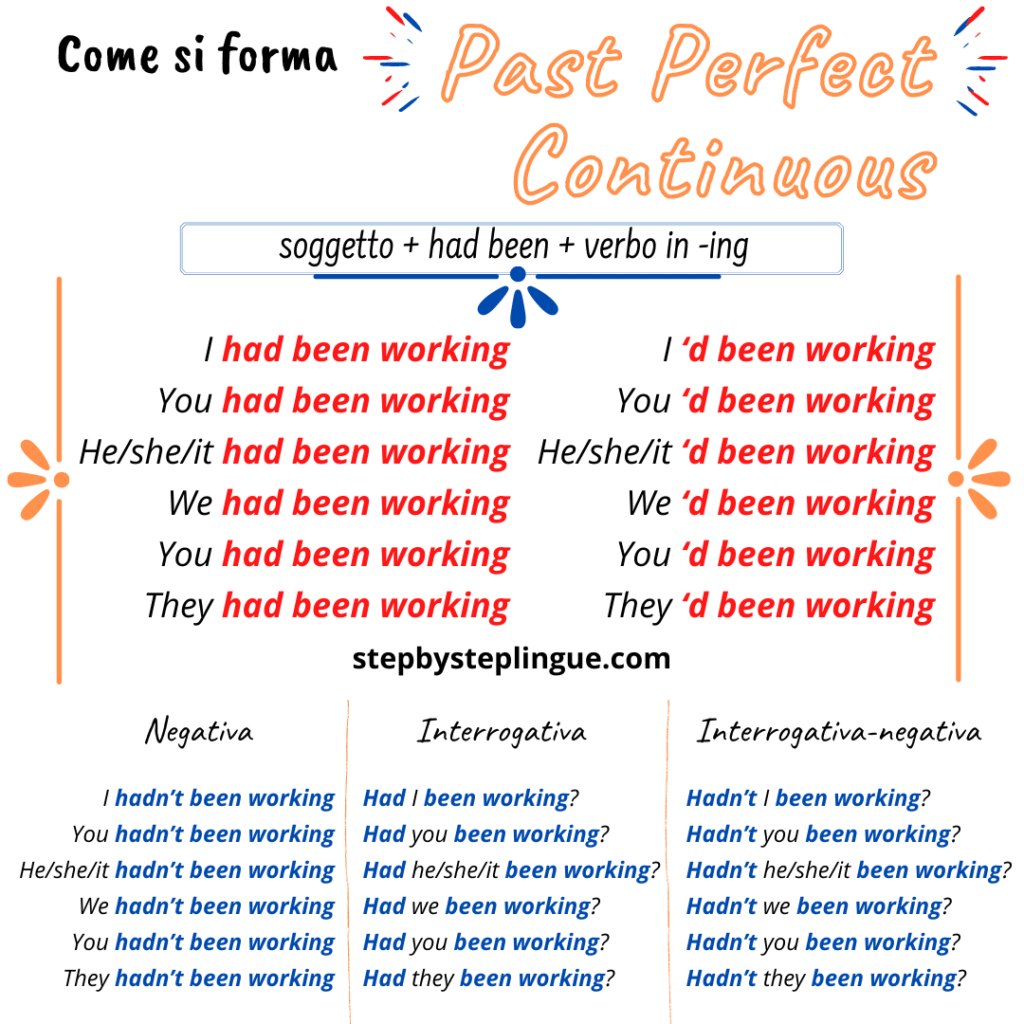
La regola per costruire il Past Perfect Continuous, infatti, è:
soggetto + to be al Past Perfect + verbo in -ing
Osserva:
| I | had been | working |
| You | had been | working |
| He/she/it | had been | working |
| We | had been | working |
| You | had been | working |
| They | had been | working |
Nella forma affermativa esiste anche la forma contratta del Past Perfect Continuous e viene usata specialmente in linguaggio informale.
Si costruisce contraendo had con il soggetto, in questo modo:
| I ‘d been working |
| You ‘d been working |
| He/she/it ‘d been working |
| We ‘d been working |
| You ‘d been working |
| They ‘d been working |
In generale possiamo dire che traduciamo il Past Perfect Continuous in italiano con l’imperfetto, il trapassato prossimo o stavo + gerundio.
Attenzione al contrario! Non è detto che un trapassato prossimo o un imperfetto italiano corrispondano sicuramente al Past Perfect Continuous!
Tutte queste differenze, però, le vedremo nel dettaglio nel prossimo Step sull’utilizzo del Past Perfect Continuous, per ora ci soffermiamo solo sulla sua costruzione.
Vediamo qualche frase di esempio con il Past Perfect Continuous:
We had been looking for my wallet for hours when Lucy found it. – Avevamo cercato il mio portafoglio per ore quando Lucy lo trovò.
I had been drinking a glass of milk before I left. – Avevo bevuto / Stavo bevendo un bicchiere di latte prima di uscire.
Come si forma il Past Perfect di to be
Come abbiamo visto nella regola qui sopra, per costruire il Past Perfect Continuous abbiamo bisogno del ast Perfect del verbo to be:
to have al Past Simple + participio passato di to be
To be è un verbo irregolare e, in quanto tale, ha una forma tutta sua del participio passato: been.
(Per il participio passato dei verbi irregolari dobbiamo fare riferimento alla terza colonna della tabella dei verbi irregolari inglesi.)
| I | had been |
| You | had been |
| He/she/it | had been |
| We | had been |
| You | had been |
| They | had been |
Verbo alla forma in -ing.
Abbiamo visto nella regola all’inizio che, per ottenere la forma progressiva del Past Perfect, il verbo di riferimento deve aggiungere un -ing finale.
La regola è la stessa che abbiamo studiato per la forma progressiva per eccellenza, ossia il Present Continuous:
forma base del verbo + –ing
Ripassa questi Step:
Come si aggiunge –ing a un verbo
Forma -ing: attenzione ad alcuni cambiamenti ortografici
La forma negativa
Per creare la forma negativa del Past Perfect Continuous dobbiamo aggiungere la negazione not appena dopo il verbo had:
soggetto + had not been + verbo -ing
La forma contratta, invece, si costruisce contraendo had con not.
Esattamente come abbiamo visto nella forma affermativa, la forma estesa si usa in modo formale, quella contratta è più informale.
| I had not been working | I hadn’t been working |
| You had not been working | You hadn’t been working |
| He/she/it had not been working | He/she/it hadn’t been working |
| We had not been working | We hadn’t been working |
| You had not been working | You hadn’t been working |
| They had not been working | They hadn’t been working |
Qualche frase di esempio con il Past Perfect Continuous nella forma negativa:
We hadn’t been studying before you arrived. – Non stavamo studiando prima che arrivassi.
I hadn’t been drinking a glass of milk before I left. – Non avevo bevuto / Non stavo bevendo un bicchiere di latte prima che uscissi.
La forma interrogativa
Per quanto riguarda la forma interrogativa del Past Perfect Continuous, si costruisce invertendo il soggetto e il verbo had:
had + soggetto + been + verbo -ing?
Non esiste la forma contratta.
| Had I been working? |
| Had you been working? |
| Had he/she/it been working? |
| Had we been working? |
| Had you been working? |
| Had they been working? |
Qualche frase di esempio con il Past Perfect Continuous nella forma interrogativa:
Had you been studying before I arrived? – Stavi studiando prima che arrivassi?
Had they been drinking a glass of milk before they left? – Hanno bevuto / Stavano bevendo un bicchiere di latte prima di uscire?
La forma interrogativa-negativa
Per la forma interrogativa-negativa dobbiamo invertire soggetto e verbo e aggiungere la negazione not:
had + not + soggetto + been + verbo -ing?
Esiste solo la forma contratta, che si forma contraendo il verbo had con la negazione not.
| Hadn’t I been working? |
| Hadn’t you been working? |
| Hadn’t he/she/it been working? |
| Hadn’t we been working? |
| Hadn’t you been working? |
| Hadn’t they been working? |
Qualche frase di esempio con il Past Perfect Continuous nella forma interrogativa-negativa:
Hadn’t you been studying before I arrived? – Non stavi studiando prima che arrivassi?
Hadn’t they been drinking a glass of milk before they left? – Non hanno bevuto / Non stavano bevendo un bicchiere di latte prima di uscire?
Risposte brevi al Past Perfect Continuous
Che cos’è una risposta breve?
Mettiamo che ci venga posta una domanda che implica semplicemente un sì o un no come risposta (es. Stavi studiando prima che arrivassi? Sì): questa viene definita risposta breve. In inglese, nelle risposte brevi è buona norma non rispondere semplicemente con sì o no, ma aggiungere anche il verbo had.
Risposte brevi affermative
Had you been studying before I arrived? – Stavi studiando prima che arrivassi?
Yes, I had – Sì, stavo studiando.
Quando si danno delle risposte brevi affermative, soggetto e verbo had sono sempre espressi nella forma estesa. Una risposta del tipo yes, I’d non esiste!
Risposte brevi negative
Had you been studying before I arrived? – Stavi studiando prima che arrivassi?
No, I hadn’t – No, non stavo studiando.
Quando si danno delle risposte brevi negative è preferibile, invece, utilizzare la forma contratta hadn’t.
Passa agli Step successivi:
Quando si usa il Past Perfect Continuous
Past Perfect, Past Perfect Continuous o Past Continuous?
Tutti gli Step di grammatica inglese:
Indice argomenti di grammatica
Test yourself!
Quizzone
I libri che ti consiglio in questo Step
👩🏫 Grammar reference
👩🏫 Oxford practice grammar – Intermediate Book
👩🏫 English Grammar in Use – Intermediate Book
👩🏫 Practical English Usage
👩🏫 Longman dictionary of contemporary English
❤️🔥 Pride and prejudice
Scopri i libri migliori per imparare l’Inglese:
Libreria di Inglese