
Come si forma il Past Perfect
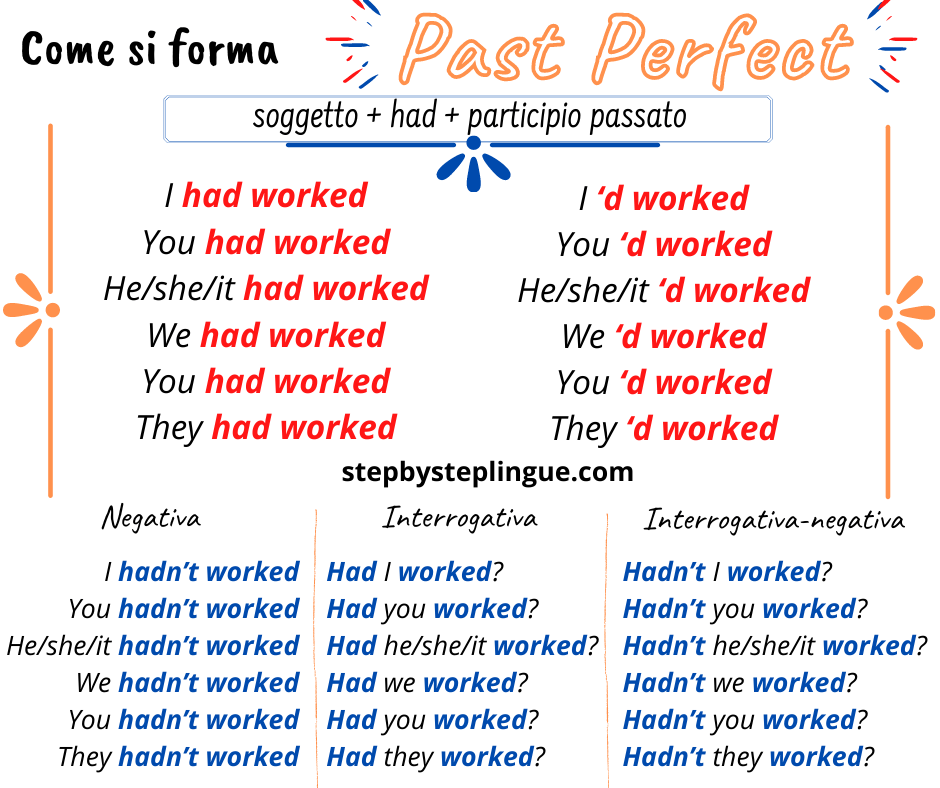
Il Past Perfect è un verbo composto inglese costituito da due elementi: il verbo to have al Past Simple e il participio passato. Questo vale sia per la forma affermativa, che negativa e interrogativa.
Ripassa questi Step:
Il verbo to have al Past Simple
Come si forma il Past Simple
Tabella: verbi irregolari in inglese
Come si forma il Present Perfect
Argomenti di questo Step
Come si costruisce il Past Perfect?
Il Past Perfect viene definito “verbo composto” in quanto si costruisce unendo due elementi.
La regola per costruire il Past Perfect, infatti, è:
soggetto + to have al Past Simple (had) + participio passato
Osserva:
| I | had | worked |
| You | had | worked |
| He/she/it | had | worked |
| We | had | worked |
| You | had | worked |
| They | had | worked |
Esiste anche la forma contratta nella forma affermativa del Past Perfect e viene usata specialmente in linguaggio informale.
Si costruisce contraendo had con il soggetto, in questo modo:
| I ‘d worked |
| You ‘d worked |
| He/she/it ‘d worked |
| We ‘d worked |
| You ‘d worked |
| They ‘d worked |
In generale possiamo dire che traduciamo il Past Perfect in italiano con il trapassato prossimo e remoto.
Ma questo lo vedremo nel dettaglio nel prossimo Step sull’uso del Past Perfect.
Frasi di esempio al Past Perfect, forma affermativa:
She had finished the homework. – Lei aveva finito i compiti.
He had left the house. – Lui era uscito di casa.
They had eaten breakfast. – Loro avevano fatto colazione.
We had arrived early. – Noi eravamo arrivati presto.
I had seen the movie. – Io avevo visto il film.
She had cleaned the room. – Lei aveva pulito la stanza.
He had called the doctor. – Lui aveva chiamato il medico.
They had opened the window. – Loro avevano aperto la finestra.
We had started the car. – Avevamo messo in moto la macchina.
I had bought a gift. – Io avevo comprato un regalo.
Come si forma il participio passato in inglese
Come abbiamo visto nella regola qui sopra, per costruire il Past Perfect abbiamo bisogno anche del participio passato.
Per formare il participio passato dobbiamo distinguere tra i verbi regolari e i verbi irregolari.
Verbi regolari
Nei verbi regolari, la regola è la stessa identica che seguiamo per formare il Past Simple:
forma base del verbo + -ed
Le particolarità ortografiche nell’aggiunta di -ed sono le stesse che abbiamo visto nel Past Simple.
Esempi con le particolarità ortografiche:
I had travelled
I had studied
I had stopped
I had preferred
Verbi irregolari
Per i verbi irregolari dobbiamo fare riferimento alla tabella dei verbi irregolari inglesi.
Quelli che ci serviranno saranno i verbi elencati nella terza colonna.
Esempi:
I had begun (begin – began – begun)
I had been (be – was/were – been)
I had forgiven (forgive – forgave – forgiven)
I had heard (hear – heard – heard)
La forma negativa
Per creare la forma negativa del Past Perfect dobbiamo aggiungere la negazione not appena dopo il verbo had:
soggetto + had + not + participio passato
La forma contratta, invece, si costruisce contraendo had con not.
Esattamente come abbiamo visto nella forma affermativa, la forma estesa si usa in modo formale, quella contratta è più informale.
| I had not worked | I hadn’t worked |
| You had not worked | You hadn’t worked |
| He/she/it had not worked | He/she/it hadn’t worked |
| We had not worked | We hadn’t worked |
| You had not worked | You hadn’t worked |
| They had not worked | They hadn’t worked |
Frasi di esempio al Past Perfect, forma negativa:
She had not finished the homework. – Lei non aveva finito i compiti.
He hadn’t left the house. – Lui non era uscito di casa.
They hadn’t eaten breakfast. – Loro non avevano fatto colazione.
We had not arrived early. – Noi non eravamo arrivati presto.
I had not seen the movie. – Io non avevo visto il film.
She hadn’t cleaned the room. – Lei non aveva pulito la stanza.
He had not called the doctor. – Lui non aveva chiamato il medico.
They hadn’t opened the window. – Loro non avevano aperto la finestra.
We hadn’t started the car. – Non avevamo messo in moto la macchina.
I hadn’t bought a gift. – Io non avevo comprato un regalo.
La forma interrogativa
Per quanto riguarda la forma interrogativa del Past Perfect si costruisce invertendo il soggetto e il verbo had:
had + soggetto + participio passato + ?
Non esiste la forma contratta.
| Had I worked? |
| Had you worked? |
| Had he/she/it worked? |
| Had we worked? |
| Had you worked? |
| Had they worked? |
Frasi di esempio al Past Perfect, forma interrogativa:
Had she finished the homework? – Lei aveva finito i compiti?
Had he left the house? – Lui era uscito di casa?
Had they eaten breakfast? – Loro avevano fatto colazione?
Had we arrived early? – Noi eravamo arrivati presto?
Had I seen the movie? – Io avevo visto il film?
Had she cleaned the room? – Lei aveva pulito la stanza?
Had he called the doctor? – Lui aveva chiamato il medico?
Had they opened the window? – Loro avevano aperto la finestra?
Had we started the car? – Avevamo messo in moto la macchina?
Had I bought a gift? – Io avevo comprato un regalo?
La forma interrogativa-negativa
Per la forma interrogativa-negativa dobbiamo invertire soggetto e verbo e aggiungere la negazione not:
had + not + soggetto + participio passato + ?
Esiste solo la forma contratta, che si forma contraendo il verbo had con la negazione not.
| Hadn’t I worked? |
| Hadn’t you worked? |
| Hadn’t he/she/it worked? |
| Hadn’t we worked? |
| Hadn’t you worked? |
| Hadn’t they worked? |
Frasi di esempio al Past Perfect, forma interrogativa-negativa:
Hadn’t she finished the homework? – Lei non aveva finito i compiti?
Hadn’t he left the house? – Lui non era uscito di casa?
Hadn’t they eaten breakfast? – Loro non avevano fatto colazione?
Hadn’t we arrived early? – Noi non eravamo arrivati presto?
Hadn’t I seen the movie? – Io non avevo visto il film?
Hadn’t she cleaned the room? – Lei non aveva pulito la stanza?
Hadn’t he called the doctor? – Lui non aveva chiamato il medico?
Hadn’t they opened the window? – Loro non avevano aperto la finestra?
Hadn’t we started the car? – Non avevamo messo in moto la macchina?
Hadn’t I bought a gift? – Io non avevo comprato un regalo?
Risposte brevi al Past Perfect
Che cos’è una risposta breve?
Mettiamo che ci venga posta una domanda che implica semplicemente un sì o un no come risposta (es. Tu lo avevi visto? Sì): questa viene definita risposta breve. In inglese, nelle risposte brevi è buona norma non rispondere semplicemente con sì o no, ma aggiungere anche il verbo had.
Risposte brevi affermative
Had you worked there? – Avevi lavorato lì?
Yes, I had – Sì, avevo lavorato.
Quando si danno delle risposte brevi affermative, soggetto e verbo had sono sempre espressi nella forma estesa. Una risposta del tipo yes, I’d non esiste!
Risposte brevi negative
Had you worked there? – Avevi lavorato lì?
No, I hadn’t – No, non avevo lavorato.
Quando si danno delle risposte brevi negative è preferibile, invece, utilizzare la forma contratta hadn’t.
Passa allo Step successivo:
Quando si usa il Past Perfect
Come si forma il Past Perfect Continuous?
Quando si usa il Past Perfect Continuous
Past Perfect, Past Perfect Continuous o Past Continuous?
Il Past Perfect nelle frasi ipotetiche di tipo 3 (Third Conditional)
Il Past Perfect nelle frasi ipotetiche di tipo misto (Mixed Conditional)
Torna agli Step precedenti:
Come si forma il Present Perfect
Il Past Simple dei verbi irregolari in inglese
Il verbo to be al Past Simple
Il verbo to have al Past Simple
Tutti gli Step di grammatica inglese:
Indice argomenti di grammatica
Test yourself!
Quizzone
I libri che ti consiglio in questo Step
👩🏫 Grammar reference
👩🏫 Oxford practice grammar – Intermediate Book
👩🏫 English Grammar in Use – Intermediate Book
👩🏫 Practical English Usage
👩🏫 Longman dictionary of contemporary English
❤️🔥 Pride and prejudice
Scopri i libri migliori per imparare l’Inglese:
Libreria di Inglese