
Come si forma il futuro con be going to
Il futuro con be going to è un verbo composto inglese costituito da tre elementi: il verbo to be, going to e il verbo alla forma base. Questo vale sia per la forma affermativa, che negativa e interrogativa.
Ripassa questi Step:
Come si forma il futuro con will
Come si forma to be al Simple Present?
Come si forma il Present Continuous?
Quando si usa il Futuro con be going to
Argomenti di questo Step
Come si costruisce il futuro con be going to?
In inglese possiamo formare il futuro in modi differenti e uno di questi è tramite l’utilizzo della struttura be going to.
È quello che vedremo in questo Step!
Passa a questo Step, invece, se vuoi studiare come si forma il futuro con will.
La regola per formare il futuro con be going to è la seguente:
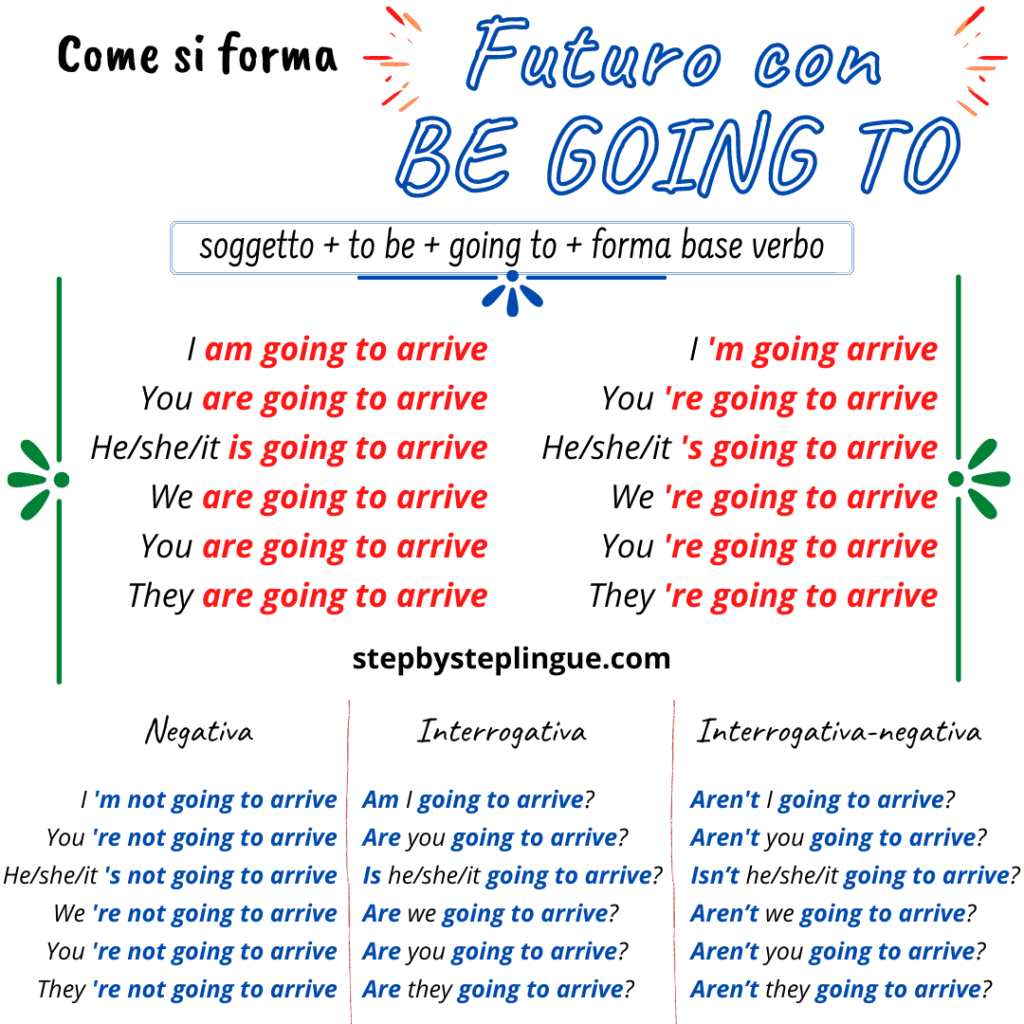
Soggetto + to be al Simple Present + going to + forma base del verbo
Che cos’è la forma base del verbo?
Prendiamo il verbo all’infinito, che riconosciamo dalla presenza del to, come ad esempio to arrive (arrivare).
Ora togliamo semplicemente il to dell’infinito: arrive.
Ci rimane solo arrive ed è questa la forma base.
Osserva ora come si coniuga un verbo al futuro con be going to:
| I | am | going to | arrive |
| you | are | going to | arrive |
| he/she/it | is | going to | arrive |
| we | are | going to | arrive |
| you | are | going to | arrive |
| they | are | going to | arrive |
Per formare il Futuro con be going to è necessario, quindi, ripassare come si coniuga il verbo to be al Simple Present.
Inoltre, la struttura con be going to non ricorda la coniugazione di un verbo al Present Continuous?
Ripassa questi Step:
Come si forma to be al Simple Present?
Come si forma il Present Continuous
Esiste anche la forma contratta nella forma affermativa del futuro con be going to e viene usata specialmente in linguaggio informale.
Si costruisce contraendo to be con il soggetto, in questo modo:
| I | ‘m | going to | arrive |
| you | ‘re | going to | arrive |
| he/she/it | ‘s | going to | arrive |
| we | ‘re | going to | arrive |
| you | ‘re | going to | arrive |
| they | ‘re | going to | arrive |
Generalmente possiamo tradurre il futuro con be going to in italiano con il futuro semplice, sottintendendo però l’intenzione di voler fare qualcosa..
Ma questo lo vediamo nel dettaglio nel prossimo Step sull’uso del Futuro con be going to.
Vediamo qualche frase di esempio con il futuro con be going to:
I‘m going to write Lucy a letter. – Scriverò una lettera a Lucy.
He is going to accept the job offer. – Lui accetterà l’offerta di lavoro.
La forma negativa
Per creare la forma negativa del futuro con be going to dobbiamo aggiungere la negazione not subito dopo il verbo to be:
soggetto + to be al Simple Present + not + going to + forma base del verbo
La forma contratta, invece, si costruisce contraendo to be con il soggetto, esattamente come nella forma affermativa vista sopra.
Esattamente come abbiamo visto nella forma affermativa, la forma estesa si usa in modo formale, quella contratta è più informale.
La forma contratta può essere costruita in due modalità differenti:
1) contraendo il verbo to be con il soggetto
2) contraendo il verbo to be con la negazione not.
Esattamente come succedeva nella forma negativa del Present Continuous!
Osserva la tabella:
| I | am | not | going to | arrive |
| you | are | not | going to | arrive |
| he/she/it | is | not | going to | arrive |
| we | are | not | going to | arrive |
| you | are | not | going to | arrive |
| they | are | not | going to | arrive |
| I | ‘m | not | going to | arrive |
| you | ‘re | not | going to | arrive |
| he/she/it | ‘s | not | going to | arrive |
| we | ‘re | not | going to | arrive |
| you | ‘re | not | going to | arrive |
| they | ‘re | not | going to | arrive |
| I | ‘m not * | going to | arrive |
| you | aren’t | going to | arrive |
| he/she/it | isn’t | going to | arrive |
| we | ‘aren’t | going to | arrive |
| you | aren’t | going to | arrive |
| they | aren’t | going to | arrive |
* Attenzione! I am not ha solo la forma contratta I’m not. Non esiste la forma I amn’t.
Vediamo qualche frase di esempio con il futuro con be going to alla forma negativa:
I‘m not going to write Lucy a letter. – Non scriverò una lettera a Lucy.
He‘s not going to accept the job offer. – Lui non accetterà l’offerta di lavoro.
La forma interrogativa
Per quanto riguarda la forma interrogativa del futuro con be going to si costruisce invertendo il soggetto e il verbo to be:
to be al Simple Present + soggetto + going to + forma base del verbo?
Non esiste la forma contratta.
| Am | I | going to | arrive? |
| Are | you | going to | arrive? |
| Is | he/she/it | going to | arrive? |
| Are | we | going to | arrive? |
| Are | you | going to | arrive? |
| Are | they | going to | arrive? |
Vediamo qualche frase di esempio con il futuro con be going to alla forma interrogativa:
Is she going to write Lucy a letter? – Scriverà una lettera a Lucy?
Are you going to accept the job offer? – Accetterai l’offerta di lavoro?
La forma interrogativa-negativa
Per la forma interrogativa-negativa dobbiamo invertire soggetto e il verbo to be e aggiungere poi la negazione not.
contrazione to be e not + soggetto + going to + forma base del verbo?
Anche in questo caso abbiamo sia la forma estesa che quella contratta, ma dato che la forma estesa è raramente utilizzata, se non in contesti molto formali, vediamo solo la forma contratta.
* Notate che la prima persona singolare I non crea la contrazione con am + not ma con are + not: Amn’t I? in inglese non esiste ed è alquanto impronunciabile. Per questo motivo utilizziamo Aren’t I?
| *Aren’t | I | going to | arrive? |
| Aren’t | you | going to | arrive? |
| Isn’t | he/she/it | going to | arrive? |
| Aren’t | we | going to | arrive? |
| Aren’t | you | going to | arrive? |
| Aren’t | they | going to | arrive? |
Vediamo qualche frase di esempio con il futuro con be going to alla forma interrogativa-negativa:
Isn’t she going to write Lucy a letter? – Non scriverà una lettera a Lucy?
Aren’t you going to accept the job offer? – Non accetterai l’offerta di lavoro?
Risposte brevi al futuro con be going to
Che cos’è una risposta breve?
Mettiamo che ci venga posta una domanda che implica semplicemente un sì o un no come risposta (es. Accetterai il lavoro? Sì): questa viene definita risposta breve. In inglese, nelle risposte brevi è buona norma non rispondere semplicemente con sì o no, ma aggiungere anche il verbo to be.
Risposte brevi affermative
Are you going to accept the job offer? – Accetterai l’offerta di lavoro?
Yes, I am. – Sì, la accetterò.
Quando si danno delle risposte brevi affermative, soggetto e verbo to be sono sempre espressi nella forma estesa. Una risposta del tipo yes, I’m non esiste!
Risposte brevi negative
Are you going to accept the job offer? – Accetterai l’offerta di lavoro?
No, I‘m not. – No, non la accetterò.
Quando si danno delle risposte brevi negative è preferibile, invece, utilizzare la forma contratta tra soggetto e to be.
Passa allo Step successivo:
Quando si usa il Futuro con be going to
Come si forma il futuro con will
Quando si usa il futuro con will
Futuro: quando si usa il Simple Present, il Present Continuous, will e be going to?
Come si forma il Future Continuous?
Tutti gli Step di grammatica inglese:
Indice argomenti di grammatica
Test yourself!
Quizzone
I libri che ti consiglio in questo Step
👩🏫 Grammar reference
👩🏫 Oxford practice grammar – Elementary Book
👩🏫 Essential Grammar in Use
👩🏫 English Vocabulary in use – Elementary Book
👩🏫 Dizionario Inglese-Italiano e Italiano-Inglese
🐕 The Hundred and One Dalmatians
Scopri i libri migliori per imparare l’Inglese:
Libreria di Inglese




La spiegazione della grammatica è molto chiara con esempi speciali da farti capire e memorizzare le regole.
Ciao Rita, grazie mille per il feedback!
Sono davvero contenta sia utile!