
Quando si usa il Present Conditional in inglese
In inglese utilizziamo il Present Conditional per fare proposte e richieste, per esprimere un desiderio ma anche per formulare il periodo ipotetico. Come? Vediamolo in questo Step!
Ripassa questo Step: Come si forma il Present Conditional in inglese
Dopo aver ripassato come si forma il Present Conditional vediamo ora, in questo Step, come dobbiamo usarlo.
In questo Step studieremo:
– quando si usa il Present Conditional
– strutture con would like e would rather
– la differenza tra would e will per fare proposte
– come si usa would you mind
– la differenza tra would, would you mind, can e could per fare richieste
– il periodo ipotetico di tipo 2
Argomenti di questo Step
Esprimere desiderio o preferenza

Fare proposte
Fare proposte: would o will?
Ripassa questo Step:
Il futuro con will per fare proposte
Fare una richiesta
Ripassa questo Step:
Verbi modali: richiesta (can, could, will, would)
Fare una richiesta: would, would you mind, can o could?
Immaginare una situazione
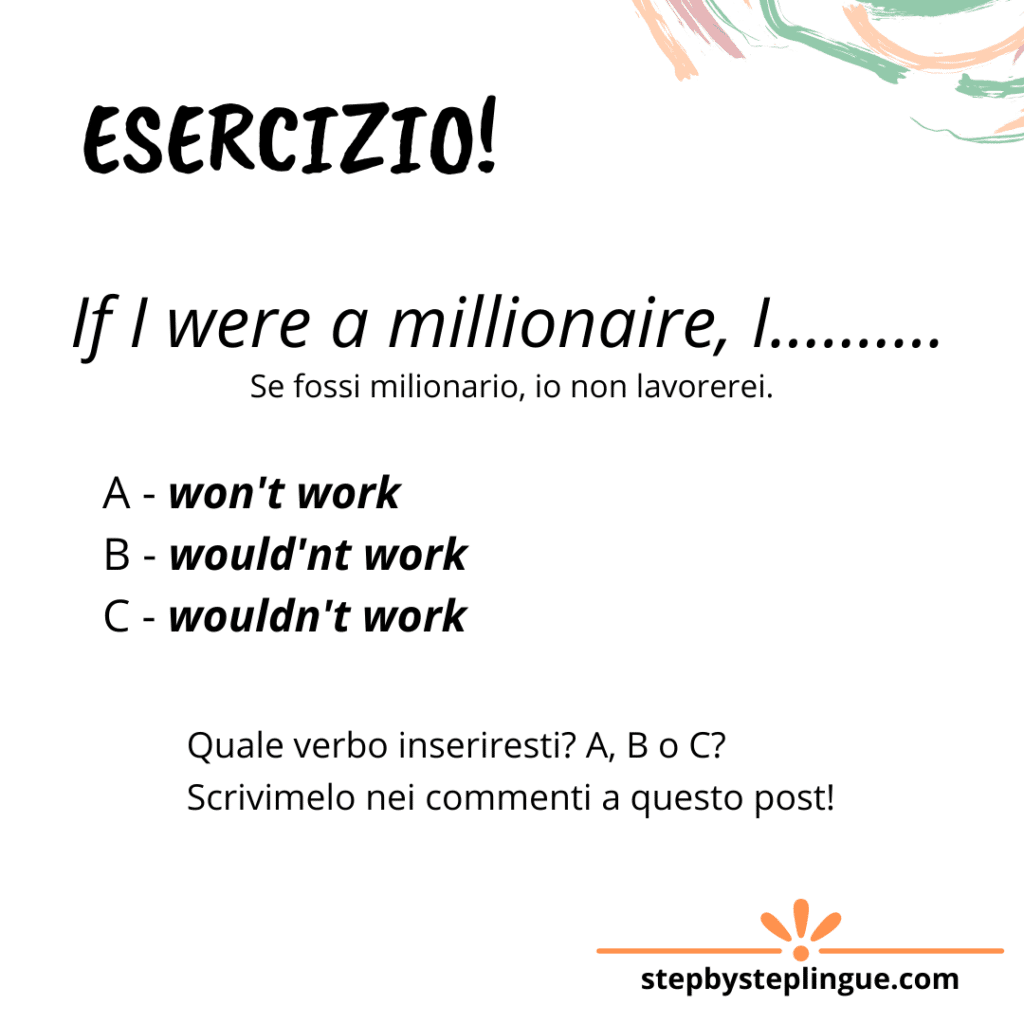
Periodo ipotetico: tipo 2
Ripassa questo Step: Frasi ipotetiche: Second Conditional
Passa allo Step successivo:
Come si forma il Perfect Conditional in inglese
Quando si usa il Perfect Conditional
Il Present Conditional nelle frasi ipotetiche di tipo 2 (Second Conditional)
Il Present Conditional nelle frasi ipotetiche di tipo misto (Mixed Conditional)
Verbi modali: richiesta (can, could, will, would)
Ripassa questo Step:
Come si forma il Present Conditional in inglese
Tutti gli Step di grammatica inglese:
Indice argomenti di grammatica
Test yourself!
Quizzone
I libri che ti consiglio in questo Step
👩🏫 Grammar reference
👩🏫 Oxford practice grammar – Intermediate Book
👩🏫 English Grammar in Use – Intermediate Book
👩🏫 Practical English Usage
👩🏫 Longman dictionary of contemporary English
❤️🔥 Pride and prejudice
Scopri i libri migliori per imparare l’Inglese:
Libreria di Inglese